
OCTOBER 2026: National Protect Your Hearing Month
October is National Protect Your Hearing Month, and for miners, it’s a good time to raise your awareness about the noise that’s around you while on the job.
Diesel engines, crushers, conveyors, haul trucks and pneumatic drills are all part of mining. The noise levels they bring can approach the near-danger zones and sometimes do. And as we explained in last month’s episode of CORESafety TV, occupational hearing loss is one of the most common work-related illnesses and can often be permanent.
Are You Taking Precautions?
Fortunately, the good news is that you can lessen the risk of hearing loss if you take the right precautions every day. This is important because once the hair cells in your inner ear are damaged, they don’t grow back.
For miners, it’s a simple fact — you absolutely need to wear headsets, earplugs, earbuds or earmuffs when you’re on the job.
And if you’re working in an area where noise levels exceed 105 dB(A), MSHA actually requires dual protection. That means wearing both earplugs and earmuffs simultaneously.
Lower Noise Levels
What about lower noise levels? Even then, research shows the risks are still there.
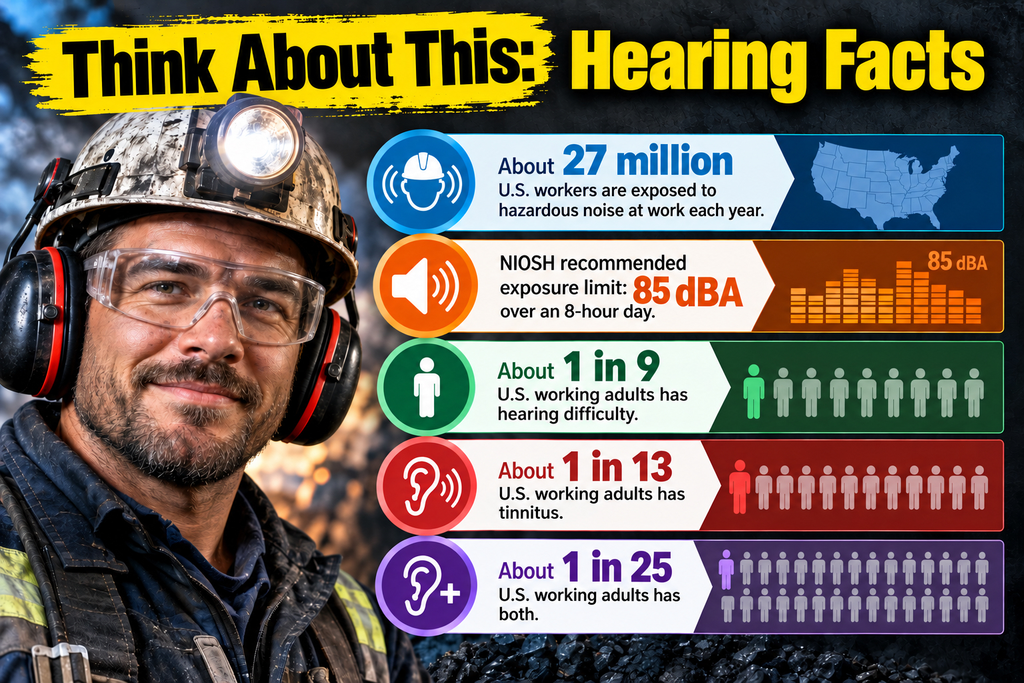
The National Institute for Occupational Safety and Health (NIOSH) considers any noise to be hazardous at 85 dBA or higher.
Its recommended exposure limit is 85 dBA averaged over an eight-hour workday, and workers exposed at or above that level are at risk of significant hearing loss over their working lives.
Decibels are logarithmic, so a sound that is 10 dB louder is ten times more intense. A small jump in noise level means a much bigger jump in risk.
Hearing Loss Can Affect More Than Your Ears
Research has shown that hearing loss can be associated with cognitive decline and heart problems. In addition, tinnitus and hearing loss can take a toll on mental health. It also can affect your daily safety.
Workers with hearing loss are more likely to be injured on the job. And on a mine site in particular, a missed back-up alarm or radio call can matter a great deal if you don’t hear it.
Warning Signs
Hearing loss often shows up first to the people who are working around you. Watch for these warning signs:
- Trouble following conversation when there’s background noise
- Feeling that people are mumbling
- Frequently asking others to repeat themselves
If you notice a change in your hearing or develop tinnitus, get your hearing tested. A yearly hearing test is recommended for anyone exposed to hazardous noise.
Protecting your hearing starts with wearing hearing protection in noisy areas and wearing it correctly every time. Mine operators and safety professionals also have a role: they can measure noise levels, put controls in place and run hearing loss prevention programs.
Protect your hearing this month and every month. Your hearing is part of your safety, your career and your quality of life.
CORESafety TV: Think About This — Protect Your Hearing
To learn more about protecting your hearing as a miner, click here:
CORESafety Website:
To learn more about CORESafety, visit our website by clicking here.
- On October 15, 2026